

When you are travelling or have moved to another country within the EU, you may have noticed the differences in price for everyday products, food or drugstore products. We often assume these differences come from fairly obvious and objective factors: different tax rates, language and packaging requirements or transport costs.
But in some cases, those elements don’t tell the full story.
For example, a study from our Austrian member Arbeiterkammer (AK) Wien showed an Austrian consumer pays €5.99 for a tub of Cremissimo ice cream, while in Germany the exact same product costs just €2.99. That is not a small difference, it is double the price. And it’s not an isolated case. Across Europe, consumers frequently encounter situations where identical branded products are significantly more expensive in one country than in another, even when the countries are geographically close and economically comparable. This is confirmed by a study delivered for the European Commission in 2020, which estimated that Territorial Supply Constraints cost consumers at least €14 billion a year.
BEUC and its independent national members have investigated these price discrepancies and found that they are not always due to objective cost differences. So, what’s going on? Legislators call it “Territorial Supply Constraints”. We call them unjustified restrictions for retailers set by manufacturers that lead to price increases for consumers.
What does Territorial Supply Constraints mean?
Territorial supply constraints (TSCs) are practices used by manufacturers to restrict where retailers can source their products from and prevent them from shopping around borders to find the best deals.
Imagine a supermarket manager in Belgium trying to get the best deal for its customers. He knows that the same product is cheaper in Germany, so naturally he would want to buy it from a manufacturer there. But he can’t. The manufacturer may refuse to supply the product for resale in Belgium or may add unjustified conditions that make it impossible, such as limiting volumes, requiring country-specific packaging and so on.
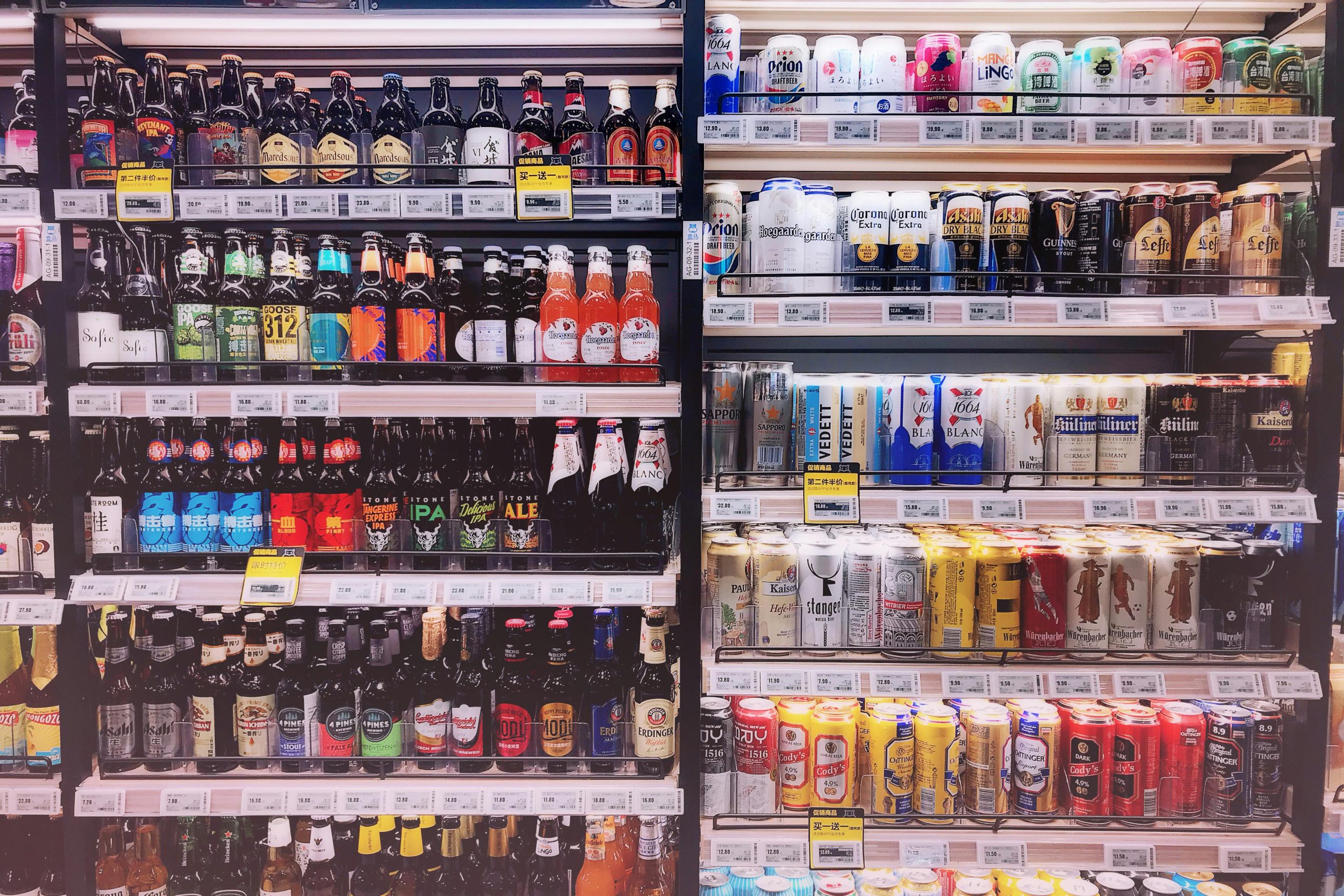
A good example of this is the AB InBev case from 2019 where the EU Commission fined the company for hindering the cross-border trade of its Jupiler beer between the Netherlands and Belgium. As a market leader in Belgium, AB InBev has a responsibility not to abuse its market power by restricting competition. However, AB InBev used various tactics to make it harder for Belgium retailers and wholesalers to buy Jupiler beer for a better price in the Netherlands and resell it in Belgium. For example, they removed any French language content from the label, which was necessary to sell the beer products in bilingual Belgium; limited the volumes of Jupiler beer supplied to a wholesaler in the Netherlands to avoid export to Belgium; and required a retailer active in both countries to only offer certain customer promotions to its Dutch customers.
What is the impact of territorial supply constraints on consumers?
The most immediate impact is on your wallet. When retailers are unable to source products from cheaper markets, they are forced to buy from designated national suppliers, often at higher prices. These additional costs are typically passed on to consumers. In other words, consumers may end up paying significantly more for the exact same product simply because of where they live. A clear example comes from a study from our Dutch member Consumentenbond, which reveal that consumers can pay between 12% and 20% more for the same basket of groceries simply because they live in a different country.
Secondly, TSCs weaken competition and can lead to fewer options to choose from when we walk into a supermarket. As retailers are being restricted, the manufacturers face less pressure to compete on prices or offer better quality products. The supermarket has no option but to accept the price as there is no or limited competition between suppliers.
When competition weakens, prices tend to stay high and innovation slows down, resulting in higher grocery bills and less variety on the shelves for consumers.
Read more: Why competition authorities must act now against ‘greedflation’
Finally, TSCs undermine the free movement of goods within the Single Market by creating artificial borders. For consumers, this means that the benefits of European integration, such as access to a wider range of products at competitive prices, are not fully realized. Instead, markets remain fragmented.
Consumers expect that within a unified market prices reflect real cost differences, not artificial restrictions. When price gaps are large and unexplained, trust in the market diminishes and people can start to feel they are being treated unfairly because of their place of residence, without a justified reason.
What can the EU do against Territorial Supply Constraints?
At BEUC, we believe this situation isn’t fair, and it doesn’t have to stay this way.
Today, some of these practices can already be addressed under EU competition law, such as was the case with AB InBev and Mondelez. In both cases, the European Commission relied on competition rules to investigate unjustified forms of TSCs and revealed how these practices create artificial price differences and limit consumer choice across the EU.
However, competition law is not always enough as it does not catch all forms of TSCs which are widespread and affect many products across Europe. Crucially, it misses addressing unilateral constraints imposed by companies that do not hold such a strong position on the market, yet still manage to artificially split up the EU’s internal market. Not to mention that these cases can be complex and take a long time; with the consequence that, by the time the company has been fined, consumers have lost a lot of money.
People should not have to pay more based solely on where they live.
That’s why BEUC calls for stronger EU action through a legislative solution that introduces clear rules aimed at defining and stopping unjustified TSCs.